If you are deciding whether to buy
The seven-step check, then the proprietary blend post, then the panel itself. In that order you read the label rather than the claims.
Official product information
Two guides, three posts, a five-minute label method and the ten federal pages every claim on this site traces back to.
Written and reviewed by the GlycoBarrier Editorial Desk · Last updated September 22, 2026
Quick answer
This section collects the reading on this site that is not about buying anything: a guide to what the circulation-supplement category is, a seven-step check to run before choosing one, and three posts on proprietary blends, the evidence behind the named botanicals, and the arithmetic on a dropper bottle label. All of it works on any product, not only on GlycoBarrier.
Free reading
Everything in this section is about the category rather than about the bottle. None of it is a sales page, and all of it is written so that it works as well against a competitor’s label as against this one.
Two long guides and three shorter posts. The guides are where to start if you have never bought a circulation supplement; the posts each take one narrow thing and do it properly. Between them they cover the three questions this category answers worst: what is actually in the bottle, what the research does and does not say, and whether the numbers on the label agree with each other.
Long reads
What the category is, in plain terms: which botanicals keep turning up and why the same handful appear together — the venous-tone pairing of horse chestnut and butcher’s broom, the cardiac-herb pairing of hawthorn and motherwort, and the antioxidant names added to almost anything. It sets out what a supplement here is permitted to claim, which is far less than most packaging implies, and where the line between a structure or function claim and a drug claim falls.
Who it is for: anyone starting to look at this category who wants its shape before comparing products. If you have wondered why four brands contain nearly the same six plants, this is the page that answers it.
A seven-step check to run before you pay, built as a sequence: find the panel, read the serving arithmetic, work out what a blend total hides, check the plant part, look for a standardisation, find the price and refund window before checkout, and decide who you would call if it went wrong. The useful part is that it is applied to GlycoBarrier as well, and this product does not pass three of the seven.
Who it is for: anyone comparing two or three products with a card in their hand. Open it in a second tab while you read a listing.
Shorter reads
A blend total is better than no number, and it is still what stops a good panel being a complete one. This post sets out what “proprietary” lets a manufacturer leave out, what the rules still require — ingredients in descending order by weight, the one thing a blend cannot hide — and how to read a blend backwards. It uses this label’s 121 mg as the worked example.
Who it is for: anyone who has seen one number where they expected six and wanted to know whether that is allowed.
Three of the six botanicals have federal health pages, and this post reads all three. It is where the strongest finding near this product lives: a review of horse chestnut seed extract in chronic venous insufficiency reporting improvement in symptoms such as leg pain, swelling and itching, with one study finding it comparable to compression stockings. It carries the warning that comes with it, and it is straight about grape seed extract, where the federal summary says research has not shown it helpful for any health condition.
Who it is for: anyone who wants to know whether these plants have evidence behind them and will accept an uneven answer.
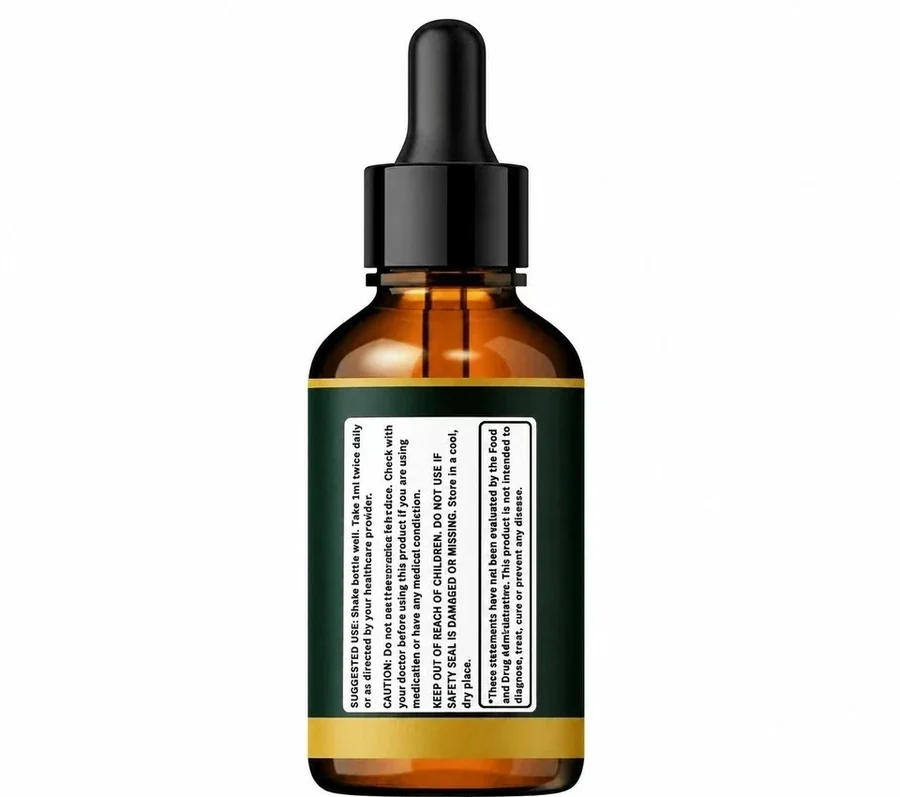
The shortest and most practical. Bottle volume, serving size, servings per container: three numbers that must agree, checked in under a minute. This label passes — 60 mL at 2 mL a day is 30 days, and the panel declares 30 servings — and the post explains what it means when a dropper label fails.
Who it is for: anyone buying liquid drops of any kind. It is the one piece of reading here that will save you money on a product we do not sell. All three are listed on the blog index.
The method
The method the two guides teach, compressed. It works on a capsule, a gummy or a dropper bottle, and needs nothing but the pack in your hand.
Not the marketing panel, not the roundels. If there is no panel at all, stop: everything else on the box is decoration. Photograph it, because it is usually the smallest print there and you will want to read it at home.
Serving size multiplied by servings per container should equal what is in the pack. When those numbers disagree, nobody proofread the label, and a label nobody proofread is a poor guide to what was done with the liquid.
If it is there you are being given one total instead of six amounts. The list is still in descending order by weight, so you know which ingredient is largest and which is smallest, and nothing more.
A good label prints the part - leaf, root, fruit, seed - and often a standardisation. Without them you cannot match the ingredient to the research, because research is done on a specific preparation of a specific part. This is the check most people skip and the one that matters most.
The excipient list covers sweeteners, preservatives and anything you avoid deliberately. The warnings say who should not take it. The FDA footnote is on every supplement sold in the United States: normal, not alarming.
Sources
Every outside claim on this website traces to one of the ten pages below. They were opened and read, they are cited as organisation pages rather than study identifiers, and none studied this product. They are free, they are selling nothing, and they are a better first stop than any page written by somebody who profits from your answer — this one included.
| Source | What it answers |
|---|---|
| NCCIH, Hawthorn | Whether hawthorn has evidence behind it, and the heart-medicine interaction including digoxin. |
| NCCIH, Horse Chestnut | The strongest finding in this category, and why the plant part matters: raw seeds, bark, flowers and leaves are unsafe to swallow, properly processed extract is not. |
| NCCIH, Grape Seed Extract | A plainly worded answer: studied for several conditions, not shown to help any, generally well tolerated, may slow clotting. |
| NCCIH, Herbs at a Glance | Whether a herb has a federal summary at all. Two of the six here are not in the index. |
| NCCIH, Using Dietary Supplements Wisely | Ground rules before buying anything in this category. |
| NIH ODS, Dietary Supplements: What You Need to Know | The short consumer briefing, and the best single page to read first. |
| NIH ODS, Botanical Dietary Supplements | Why two products with the same plant name are not the same thing. |
| FDA, Information for Consumers | What the regulator does and does not do. Read it before believing any seal on any box. |
| MedlinePlus, Varicose Veins | The medical topic people most often arrive here looking for, and what a clinician can offer. |
| American Heart Association, What Is Cardiovascular Disease? | The wider picture from a national body rather than a seller. |
Full citations, with links and the date we read them, are at the foot of this page.
The honest section
Reading has limits, and it is worth saying where they fall on this product.
No guide can tell you the split. The panel publishes one total for six botanicals and nothing divides it, so no amount of reading about hawthorn will tell you how much hawthorn is in this bottle.
No guide can match this product to a study. Every source above describes a specific preparation at a specific amount. This label states no preparation, and no trial of this formula exists. Anyone who bridges that gap is filling it with something they made up.
No guide can price it or date the refund window. Neither was supplied to us. The listing is the only place either appears.
And no guide replaces a clinician. If you are here because of leg swelling, pain or visible vein changes, the medical topic pages above exist for that, and a supplement can delay the appointment by months.
Three routes
Three routes through the same material, depending on why you opened this page.
The seven-step check, then the proprietary blend post, then the panel itself. In that order you read the label rather than the claims.
The evidence post, then the ingredients page, then the federal pages in the references. Expect an uneven answer: one ingredient has a real trial record, one has a page saying it has not been shown to help anything, and two have no federal summary at all.
The dropper label post, then how to take it, then safety and interactions — that last one before your first dose if you take any regular medicine.
These pages are written and reviewed by the GlycoBarrier Editorial Desk, last reviewed September 22, 2026. How each fact is sourced is on the about page.
Questions
No dietary supplement is. The FDA is not authorised to approve supplements for safety and effectiveness before they are sold. A seal reading “FDA-registered facility” describes a factory’s registration, not this product.
It means no US reference intake exists for these botanicals, so the panel cannot print a percentage. It is a normal and honest line on a herbal label, not a warning - but it does mean there is no official yardstick to measure 121 mg against.
Because a buyer holding the bottle will see them, and a site that described this product without mentioning them would be describing a different bottle. They are a printing signal, not evidence about the liquid.
No. Split six ways it is small. Published human work on horse chestnut uses a standardised seed extract taken daily for weeks, and hawthorn trials use hundreds of milligrams of a single standardised extract. The whole GlycoBarrier blend is 121 mg.
References
Liquid drops, 2 FL OZ / 60ML a bottle, 30 servings at 1 mL twice daily. Order desk +1 (302) 200-3480.
Price and money-back window on the listing · ships from inside the US · order desk +1 (302) 200-3480