Good Manufacturing Practice
A process mark. It describes how a factory keeps records, cleans between runs and documents a batch. It says nothing about whether this formula works, and it is not an approval of this product.
Official product information
Ten quality marks on this packaging, and not one of them is a test result you can read. Here is what each actually means.
Written and reviewed by the GlycoBarrier Editorial Desk · Last updated September 22, 2026
Quick answer
The GlycoBarrier packaging carries a GMP mark, an FDA-registered facility roundel, a foreign-and-domestic ingredients seal and a money-back seal, plus six marks inside the seller’s panels. None is an approval of this formula and none is a laboratory result. “Hypoallergenic free” is a meaningless phrase, and “product / lab tested” is misspelled on the roundel and has no document behind it. Lot GLY-26/GO-2426 and certificate GLY-2426-26-GO are reference codes only.
Straight answer
There are four seals on this packaging and six more marks inside the seller’s panels. Ten quality signals, and not one is a test result you can read. Two describe a factory, one a refund, one sourcing, three the ingredient list; one is misspelled, one is meaningless and one is simply odd.
That is not an accusation. It is the ordinary state of a US supplement label, and the marks are legal and common. The problem is that they are laid out in a way that reads like verification, and a buyer is entitled to know which ones carry a document.
The short answer is none of them. No certificate of analysis was supplied for this product. Lot GLY-26/GO-2426 and certificate reference GLY-2426-26-GO are codes without an attached document. Everything below is written with that established.
The seals
A process mark, a registration, a sourcing statement and a refund pointer. None is an approval of this formula.
A process mark. It describes how a factory keeps records, cleans between runs and documents a batch. It says nothing about whether this formula works, and it is not an approval of this product.
Facilities that make supplements are required to register with the FDA. This describes a registration, not an inspection result and not an approval. No dietary supplement is FDA approved.
An unusually candid mark, and worth more than it looks. It says openly that some raw material is imported. Which ingredient comes from where is not published, but the seal at least does not claim otherwise.

Points at a refund window that no supplied document states the length of. Read the window on the marketplace listing before you pay, screenshot it, and keep the order email.
The third is the one to notice, and the only mark here we would call genuinely creditable. “Foreign and domestic ingredients” says out loud that some raw material is imported, which is true of almost every botanical supplement sold in the United States and almost never printed. Which ingredient comes from where is not published — but the seal does not pretend otherwise, and that is a rarer thing than it should be.
The panel marks
| The mark | What it actually means |
|---|---|
| Gluten free | Printed on the Daily Support panel. A sourcing statement about the ingredient list, not a statement that the batch was tested for gluten. |
| Non-GMO | Most botanical extracts have no genetically modified version in commerce, which makes this easier to earn than it looks. |
| Vegan friendly | Credible on this product. The other ingredients are water, vegetable glycerin, flavour and preservatives - nothing animal-derived is named on the panel. |
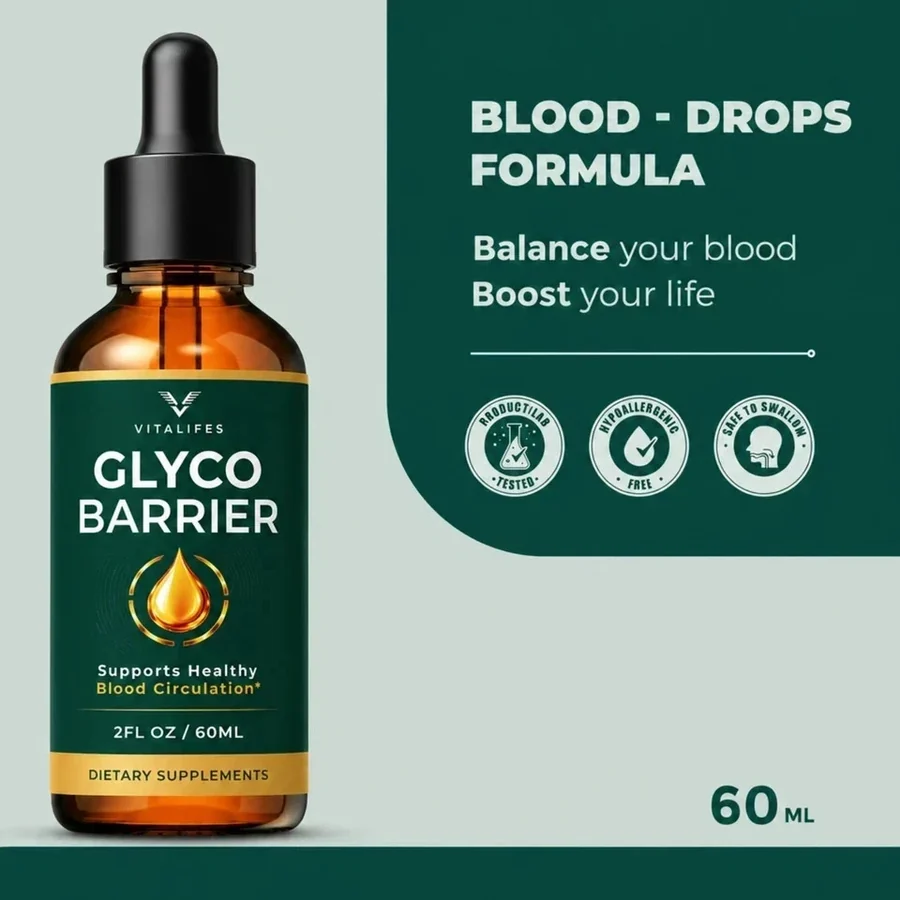
| Product / lab tested | Printed on a roundel, misspelled, with no document behind it. No certificate was supplied with this product, so there is nothing for you to read. Treat it as a claim, not a result. |
| Hypoallergenic free | This phrase does not mean anything. “Hypoallergenic” and “free” contradict each other, and neither is a regulated term on a US supplement label. We would ignore this roundel entirely. |
| Safe to swallow | An odd thing to need to say about drops that are sold to be swallowed. It appears to be reassuring buyers that the dropper contents are taken by mouth rather than applied. |
“Hypoallergenic free” is a meaningless phrase. There is nothing there to dispute. “Hypoallergenic” and “free” contradict each other, neither is a regulated term on a US supplement label, and the combination describes nothing at all. We would ignore that roundel entirely.
“Product / lab tested” has no document behind it, and the roundel is misspelled. The artwork reads “RRODUCTILAB TESTED”. Whatever testing it refers to, no certificate was supplied, so there is nothing for you to read and nothing for us to check. Treat it as a claim, not a result.
The honest section
| The question | Why it matters | Published? |
|---|---|---|
| Which laboratory did the testing? | A testing claim with no laboratory named cannot be checked by anyone. | No |
| Was the laboratory independent of the manufacturer? | In-house and third-party testing are different claims with the same word. | No |
| What was tested — identity, potency, or both? | Confirming a plant is what it says is a different test from measuring it. | No |
| Was the finished liquid tested, or only the raw material? | A raw-material certificate says nothing about the bottle. | No |
| Which lot does any test relate to? | A certificate naming no lot cannot be matched to the bottle in your hand. | No |
| Was it screened for heavy metals? | A routine check on botanical extracts. | No |
| Was it screened for microbial contamination? | A water-based liquid carries two preservatives for a reason. | No |
| How is the horse chestnut extract standardised? | The evidence and the warning both attach to a standardised seed extract. | No |
| What is the extract ratio for any of the six? | Without a ratio, “extract” is a word rather than an amount. | No |
| How does the 121 mg divide across the six? | Descending order by weight is all the panel tells you. | No |
Ten rows, ten blanks.
Two things follow. Nobody outside the manufacturer can confirm what is in this liquid. And this is normal for the category rather than unusual for this product — an explanation, not an excuse, and the reason the choosing guide puts a published certificate near the top of its checklist.
Printing
| As printed | Should read | Where |
|---|---|---|
| “Chinesa Hawhorn Extract” | Chinese Hawthorn Extract | Two letters dropped from one ingredient name on the panel. |
| “Horse Cheatnut Extract” | Horse Chestnut Extract | A transposed pair in the second botanical. |
| “Otter Ingredients” | Other Ingredients | The heading above the excipient list. |
| “Butcher’s broom Extract” | Butcher’s Broom Extract | Lower-case where the rest of the list is capitalised. |
| “have nal been evaluated” | have not been evaluated | Inside the FDA disclaimer itself, on the side panel. |
| “RRODUCTILAB TESTED” | Product / lab tested | On a roundel in the Blood-Drops Formula panel. |
Read that list the right way round. Misprinted artwork is a quality-control signal about the printing, not evidence about the liquid: a blend total of 121 mg is still 121 mg however the name above it is spelled.
What it tells you is that nobody proofread the artwork, including the line inside the FDA disclaimer itself. The same organisation that signed off a roundel reading “product / lab tested” did not catch six typos on its own bottle.
The standard
It is easier to judge what is missing if you know what a real document looks like. A certificate of analysis is one or two pages naming four things: the product, the lot, the laboratory and the date. Under that sits a table with a row per test — identity, potency, heavy metals, microbial counts — each with a method, a specification and a result.
The useful part is that you can check it against the bottle in your hand: the lot on the paper matches the lot on the base, or the document belongs to a different batch.
That is the difference between a certificate and a code. These are reference codes for the batch. No certificate document was supplied with them, so they are references, not results. A code you cannot open is not a test you can read.
The NIH Office of Dietary Supplements makes the broader point: supplements are not approved before sale, and quality varies between products and between batches of the same product. That is why an independent document matters.
Credit where it is due
Serving size, servings per container, a declared blend total and a full other-ingredients list. Plenty of this category prints no panel at all.
60 mL at 2 mL a day is 30 days, and the panel declares 30 servings.
In descending order by weight, with the plant part given for three. The seller’s panel names four; the label names six, and the label wins.
“Shake bottle well. Take 1ml twice daily or as directed by your healthcare provider.” Many dropper products print no instruction.
“Foreign and domestic ingredients” concedes something most labels leave out entirely.
Check with your doctor before using this product if you are using medication. Printed on the bottle, not added by us.
A page listing only the failures would be as unbalanced as one listing only the seals. What is missing is the layer above the label mechanics: a document, from a named laboratory, tied to a lot you can read off the base of your own bottle.
What you can do
You are allowed to ask for a document, and asking is what makes sellers publish them. The route is the order desk on +1 (302) 200-3480.
A certificate of analysis for lot GLY-26/GO-2426. The name of the laboratory that produced it. Whether the finished liquid was tested or only the raw materials. And the plant part and standardisation for the horse chestnut extract.
If no certificate is available, that is an answer. If one exists, ask for it by email and check that the lot on the document matches the lot on your bottle.
The website desk at [email protected] handles this site rather than orders, Monday to Friday, 9:00am - 5:00pm ET. If a certificate is ever published, tell us there and this page changes.
Questions
The bottle artwork and listing panels supplied with the product, and the seller’s own detailed pack. Where the two disagree, the label wins - which is why this site publishes six ingredients while the pack names four.
Because a buyer holding the bottle will see them, and a site that described this product without mentioning them would be describing a different bottle. They are a printing signal, not evidence about the liquid.
The label’s only manufacturing line reads “Distributed by - Vitalifes”. That is a distributor statement, not a factory address, and no factory is named anywhere in the material supplied to us.
RO water, vegetable glycerin, natural flavor, sodium benzoate, potassium sorbate, malic acid and sucralose. Sodium benzoate and potassium sorbate are the preservatives; sucralose is the sweetener; malic acid is the acidity regulator. All seven are printed on the panel.
Not published. “Proprietary Blend” means the manufacturer declares one total instead of six amounts. US rules allow it, provided the ingredients are listed in descending order by weight - which tells you gotu kola is the largest share and grape seed the smallest, and nothing more.
References
A 121 mg blend of six named botanicals. The marks on the packaging describe a factory and a refund, not a test. Order desk +1 (302) 200-3480.
Price and money-back window on the listing · ships from inside the US · order desk +1 (302) 200-3480