Supports healthy blood circulation
The bottle’s claim, repeated. The ingredient with the best claim to it is horse chestnut — which is not one of the four plants the seller’s own ingredient panel names.
Official product information
One claim on the bottle, four on the Daily Support panel, four on the top-benefits panel — quoted word for word, then the list of what these drops do not do.
Written and reviewed by the GlycoBarrier Editorial Desk · Last updated September 22, 2026
Quick answer
One claim is printed on the bottle: “Supports Healthy Blood Circulation*”. Four more appear on the seller’s Daily Support panel and four on the top-benefits panel. Every one is a structure/function claim — the modest wording US law allows a dietary supplement, describing what a formula is offered for rather than what it has been shown to do. GlycoBarrier is not a treatment for any condition, no trial of this formula has been published, and the list of what it does not do is further down this page.
What the label says
The front of the bottle carries exactly one claim, and it is worth reading letter by letter, asterisk included:
“Supports Healthy Blood Circulation*”
“Supports” is the verb US law leaves open to a dietary supplement. Not improves, not restores, not increases. It says the product is offered as part of the ordinary function of a healthy body.
“Healthy blood circulation” is a normal structure or function of the body, which is what these claims may refer to. A claim about a problem with circulation — a disease, a diagnosis, a named condition — is not permitted and appears nowhere on this label.
The asterisk ties the sentence to the footnote on the side panel: these statements have not been evaluated by the Food and Drug Administration, and the product is not intended to diagnose, treat, cure or prevent any disease. That footnote is the boundary of everything else on this page.
One claim, inside the permitted wording, with the required footnote. By the standards of this category that is a restrained front label, and it is worth saying before we reach the panels — where the seller, rather than the bottle, does the talking.
The seller’s panel
One repeats the bottle, one is about sourcing, and two appear nowhere on the label itself.
The bottle’s claim, repeated. The ingredient with the best claim to it is horse chestnut — which is not one of the four plants the seller’s own ingredient panel names.
Three sourcing statements rather than benefit claims. The honest one is the last: the other-ingredients line names nothing animal-derived. None of the three is a certification, and none implies the batch was tested.
From the panel, not the bottle. No ingredient here has a federal page describing an effect on energy, and nothing published lets anyone say this formula produces one.
Also panel-only. Hawthorn is the ingredient behind it, and NCCIH’s summary is that hawthorn has been studied for heart failure and blood pressure and the evidence is not strong enough to settle it.
Quoted from the panel supplied to us, word for word. All four are structure/function claims and none names a condition.
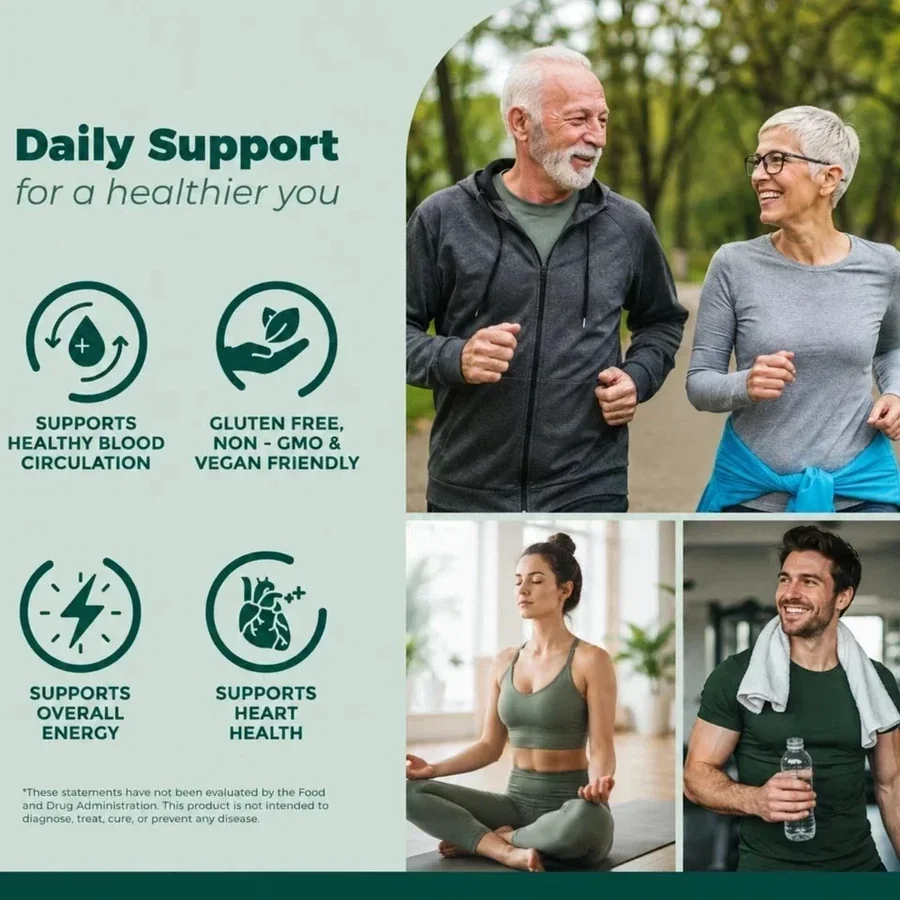
The seller’s panel
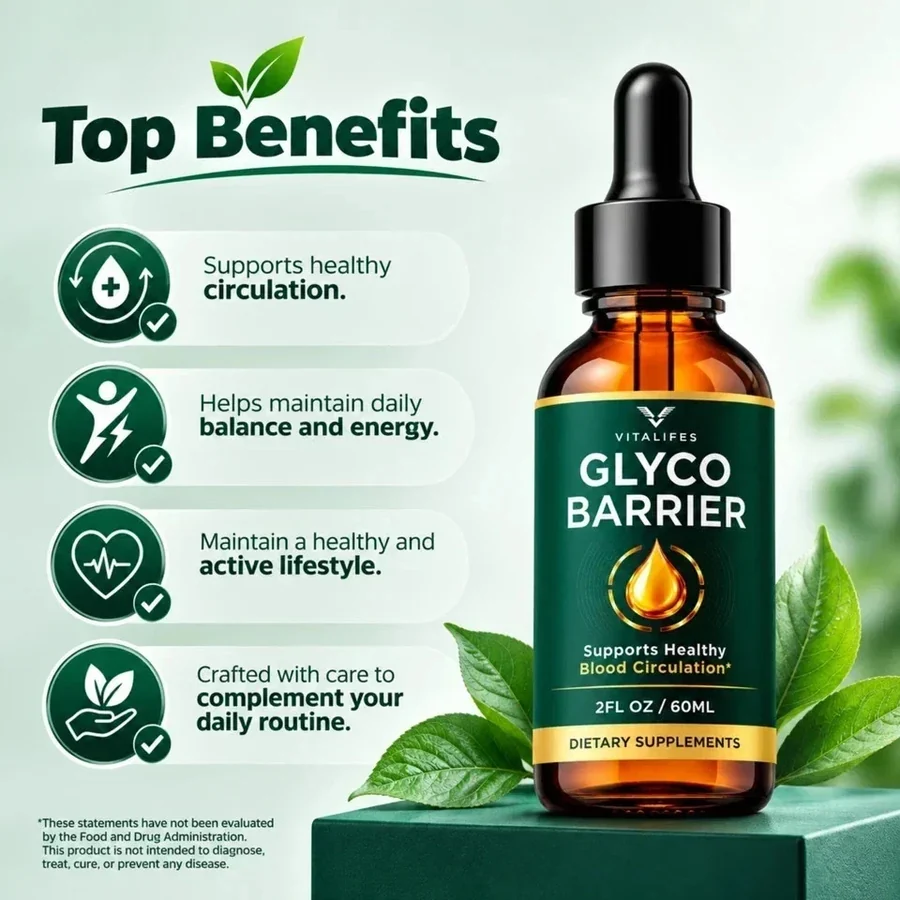
The same idea, shortened. Nothing new is claimed and nothing stronger implied, which is the correct way for a marketing panel to restate a label claim.
“Maintain” does the job “supports” does: keeping an ordinary function going rather than changing anything. “Balance” is not a defined physiological term, which makes this the vaguest of the eight panel lines.
A claim about the buyer rather than the product, and not testable in either direction.
Not a health claim at all — a sentence about manufacturing sentiment and a sentence about habit. It tells you nothing about what is in the bottle.
Four lines, and the interesting thing is how carefully they avoid saying anything a regulator would object to. Not one names a condition; not one promises a change. That is not a complaint — but it does mean everything genuinely informative about this product is on the panels at the back and side of the bottle instead.
Reading a claim
Every claim on this product is the same kind of claim, and that kind is worth understanding properly, because it is the difference between what a supplement may say and what a buyer usually hears.
A role in the normal structure or function of a healthy body. The manufacturer must have some basis for it and must carry the FDA footnote, and no government body reviews or approves the sentence before it is printed.
A disease. “Treats varicose veins”, “prevents blood clots” and “lowers blood sugar” are drug claims, and a supplement making one is being sold as an unapproved drug. Nothing on this label or either panel does that, and the restraint is a point in the product’s favour.
Anything. A permitted claim is a permission, not a finding. “Supports heart health” on a panel tells you the seller decided to print it, not that a study was run or a regulator agreed.
Ask what would have to be true for the sentence to be false. “Supports healthy circulation” has no failure condition you could test, which is precisely why it is allowed — and a sentence with no failure condition is a description of intent.
The honest section
Nine printed lines, all of them careful. Here is the other list, which most pages in this category leave out. It is not a criticism; it is the boundary the product itself draws.
That list is on the benefits page deliberately rather than tucked into a disclaimer nobody reaches. If it changes your mind about buying, it has done its job.
Checkable
| What it is | Why it counts |
|---|---|
| A dose you can actually follow | “Shake bottle well. Take 1ml twice daily.” An amount, a frequency and a handling instruction. A surprising number of dropper products print a strength and no instruction at all. |
| A label whose numbers agree | 60 mL at 2 mL a day is 30 days, and the panel declares 30 servings. |
| A complete other-ingredients line | Seven names including the sweetener and both preservatives. If you avoid sucralose, you find out before you order rather than after. |
| Nothing to swallow | For anyone who has abandoned a supplement because of the capsules, this is not a marketing point. A supplement taken beats a stronger one left in a drawer. |
These are the only items on this page a buyer can verify while holding the bottle. A claim on a panel asks for trust. A bottle whose volume divides cleanly into its own declared servings asks for nothing — you can check it in fifteen seconds, and it is either true or it is not.
Our reading
So what is a fair way to hold all nine claims at once?
Separate the bottle from the panels. The bottle makes one claim and carries the footnote. The panels add eight more, two of which introduce ideas the label does not, and two of which are not health statements at all.
Then apply the amount. Whatever the six botanicals are offered for, they are offered at 121 mg of blend a serving, in proportions nobody publishes. That does not make a claim false. It does mean the sensible expectation is a daily habit rather than an effect you could point at, and it is why we would buy one bottle before six.
Then apply the evidence. One ingredient has a real controlled-trial finding in a preparation the label does not confirm. One has a federal page reporting no demonstrated benefit for any condition. One has unsettled evidence and a drug interaction worth checking. Three rest on traditional use. Nothing has been tested as this formula.
And then decide. We earn money when an order is placed through this site, which is exactly why this page ends with what the product does not do rather than with what it might. If the claims sound smaller once read properly, that is because they are smaller.
Questions
No. This is a dietary supplement, not a treatment for any condition, and the label carries the FDA footnote saying so. MedlinePlus covers varicose veins as a medical topic with medical treatments; if that is what you are dealing with, a clinician will do more than drops.
Nothing on the label claims that. The name contains “Glyco”, which points at sugar, but every printed claim on the bottle and the panels is about circulation, energy and heart health. A supplement that claimed to lower blood sugar would be making a drug claim.
No dietary supplement is. The FDA is not authorised to approve supplements for safety and effectiveness before they are sold. A seal reading “FDA-registered facility” describes a factory’s registration, not this product.
No timeline is published by the seller as a policy, and no trial of this formula exists. The seller’s own listing summary says most buyers waited three to six weeks. Four weeks is about one bottle, which makes it the natural first checkpoint.
The habit, and nothing more. The most common complaint in the seller’s own review summary is a slow start and wanting more to happen in week one, which is what a daily botanical looks like from the inside.
None are published for this product. Botanical tinctures most often cause mild stomach upset or a reaction to the taste. Anything beyond that is worth reporting to the order desk on +1 (302) 200-3480 and to your own clinician.
References
Next
One claim on the bottle, eight lines on the panels, and a footnote that governs all nine. 2 FL OZ / 60ML a bottle, 30 servings at 1 mL twice daily. Order desk +1 (302) 200-3480.
Price and money-back window on the listing · ships from inside the US · order desk +1 (302) 200-3480