GlycoBarrier blog
What a Proprietary Blend Actually Hides
One printed total instead of six printed amounts. It is legal, it is everywhere, and there is one thing it still tells you.
Start here
What the rule actually allows
A Supplement Facts panel has to tell you what is in the bottle. It does not have to tell you how much of each thing is in it.
US labelling rules let a manufacturer group several ingredients under a name of its own choosing — a proprietary blend — and declare one total weight for the group instead of a figure against each line. Two conditions come attached. Every ingredient inside the group has to be named, and the names have to be printed in descending order by weight. That is the whole bargain, and it is neither the loophole nor the conspiracy people take it for: it withholds the arithmetic while still publishing the list and the total.
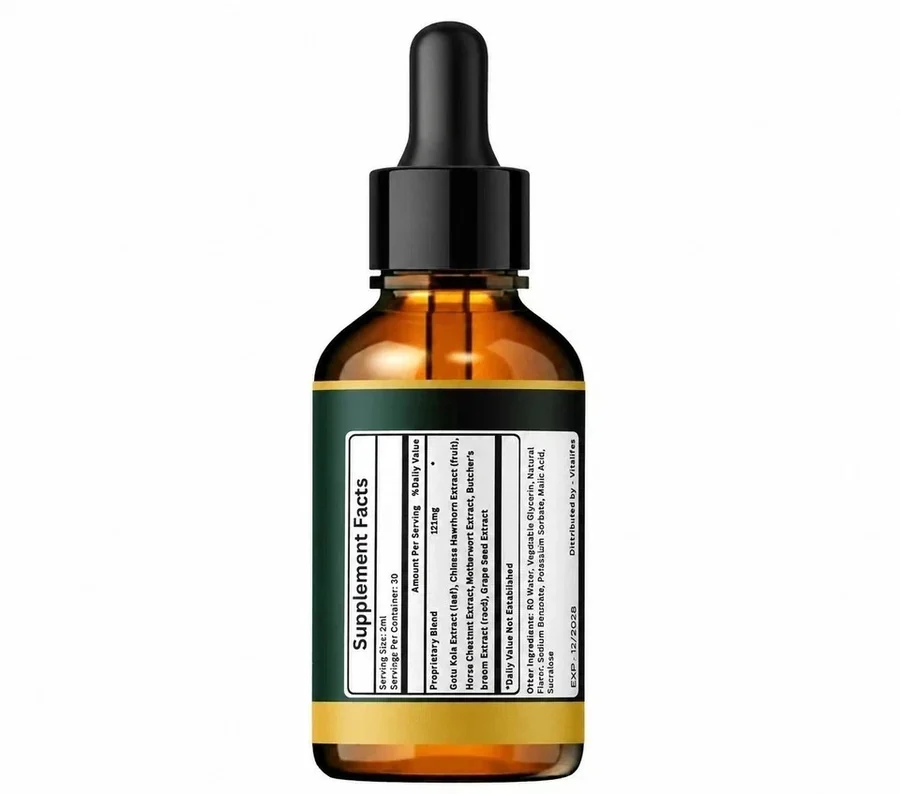
On the GlycoBarrier bottle that permission produces one line: a proprietary blend declared at 121 mg per 2 mL serving, with six botanical extracts named beneath it. One number where there could have been six.
A hierarchy
How labels handle amounts, best to worst
| What the label does | What you learn from it | How common |
|---|---|---|
| A full panel — a figure against every named ingredient | Everything. Each line can be taken to the research on it | The minority |
| A declared blend — one total, members in descending order by weight | The size of the whole and the ranking inside it, but nothing about the gaps between the ranks | Where GlycoBarrier sits |
| A total with no reliable order — members listed alphabetically, or a marketing panel that disagrees with the bottle | The size of the whole, and nothing you can trust about the parts | Easy to mistake for the row above |
| Names with no numbers — an ingredient list and a claim | The manufacturer’s intent, and nothing else | Very common in liquid products |
A printed total means somebody expected a buyer to check it. A label with no number has decided in advance that nobody will, and it is usually right.
GlycoBarrier is in the second row: a printed serving size, a serving count, a blend total and six named members in the order the rule requires. That is a better label than most things sold beside it, and it is still one row short of the only version that lets you reason about an ingredient. Both sentences are true at once, and a seller who will only say the first one is selling you something.
The part that survives
What a declared blend still tells you
Three things survive the word “proprietary”, and they are more than nothing.
The ranking
Descending order by weight is a real constraint on a real document. On this label it means gotu kola extract is the largest share, grape seed extract is the smallest, and horse chestnut sits third of six. You do not have to take anyone’s word for that; it follows from the rule and the printed order.
The ceiling
No member of a 121 mg blend can weigh more than 121 mg, and since five others have to fit alongside it, each is meaningfully less. A declared total is a hard upper bound on everything underneath it. A label with no total gives you no ceiling at all.
The average
The total divided by the number of members is a check you can run in five seconds. It is not the real split — the ordering rule guarantees it is not — but it tells you the order of magnitude everyone in the blend is working inside, which is usually enough to settle whether a formula is built as a dose or as a habit.
The other column
What it hides
What the word withholds is every fact about the parts, and it is a longer list than people expect.
The weights. Not one of the six has a published amount anywhere in any source we were given. Six named plants, six blanks.
The gaps between the ranks. Descending order gives the sequence and nothing about the distances. A blend that is almost entirely gotu kola with a trace of the other five prints on the panel exactly as six near-equal shares would. Those are very different products and the label cannot tell them apart.
The concentration. No extract ratio is printed for any of the six, and no standardisation either — no marker compound, no percentage. Extract is a word covering an enormous range of strengths.
Three of the plant parts. Gotu kola is printed “(leaf)”, hawthorn “(fruit)” and butcher’s broom “(root)”. Horse chestnut, motherwort and grape seed carry no part at all.
The common mistake
Extract weight is not plant weight
Here is the mistake that makes most blend arithmetic wrong, and it runs in both directions.
A milligram figure on a botanical supplement usually describes extract weight, not the weight of the plant it came from. An extract is concentrated: a 10:1 extract means ten parts of dried plant were reduced to one part of extract.
Published human research, meanwhile, is often conducted on dried whole herb measured in grams, or on one named standardised extract at a stated percentage of a marker compound. Neither is the same unit as an undescribed extract weight.
So holding a label’s milligrams against a study’s grams compares two different things. The honest version needs a ratio or a standardisation, and this label prints neither for any of the six. That is not a scandal — most labels in this category print neither — but it means the conversion cannot be done, and anyone who does it anyway has filled in a number nobody published.
Applied to this label
A worked example: 121 mg across six extracts
Run the method on the label this site sells, in order.
Find the number. 121 mg, printed against one serving of 2 mL. Row two of the table above.
Work out the daily figure. The directions read “take 1ml twice daily”, which is 2 mL a day, which is exactly one declared serving. So the daily figure and the serving figure are the same 121 mg. The dose instruction and the panel agree with each other, and on a surprising number of dropper bottles they do not.
Check extract or plant weight. Extract, on all six lines, with no ratio printed. It cannot be converted, so stop rather than guess.
Divide it. 121 mg shared between six extracts averages roughly twenty milligrams apiece. The ordering rule guarantees the real split is not even, and nothing printed says which way it leans, so read that figure as the scale everyone in the blend is working inside rather than as anybody’s actual share.
Compare it against the research. This is where it stops. The published work on horse chestnut is on a standardised seed extract; the work on hawthorn is on single hawthorn preparations; for grape seed, the federal summary reports that research has not shown it helpful for any health condition. None of it was run on a six-way blend, and without a ratio there is no way to line a share of 121 mg up against any of it.
The conclusion, stated plainly
The blend total is real, printed and checkable, and the label is better than most of its neighbours for publishing it. It is also small once six extracts are inside it, and the panel gives you no way to find out how it is divided. Read GlycoBarrier as a daily botanical habit at a modest scale, which is what the label actually describes, rather than as a strength you can compare with a trial.
Caveats
Two things this will not tell you
It will not tell you how the blend is split
It cannot. That is the definition of the thing. The average is a check on scale, not a measurement of anyone’s share. If a page anywhere tells you how many milligrams of hawthorn sit inside a proprietary blend, ask where the figure came from; if the panel does not print it, somebody invented it.
It will not tell you whether an ingredient works
Dose arithmetic is about strength, not usefulness. A generous share of something with no evidence behind it is still a generous share of something with no evidence behind it. Those are two separate questions and the panel speaks to one of them.
Small numbers are not automatically a red flag either. The problem is a small number with no ratio, no split and no way to check it.
Summary
The one-minute method
Five steps, about a minute, and it works on any supplement in any form. One. Find the printed total and the serving it belongs to. Two. Multiply it out to a day using the directions, and notice if the two disagree. Three. Look for an extract ratio or a standardisation, and if neither is there, refuse to convert. Four. Divide the total by the number of names sharing it. Five. Read the first name in the list, because the ordering rule makes it the largest, and ask whether it is the ingredient the marketing is built on.
If there is no total to find, you are finished in ten seconds instead of sixty.
References
Sources
- NIH Office of Dietary Supplements. Dietary Supplements: What You Need to Know. ods.od.nih.gov. Accessed September 22, 2026.
- NIH Office of Dietary Supplements. Botanical Dietary Supplements: Background Information. ods.od.nih.gov. Accessed September 22, 2026.
- U.S. Food and Drug Administration. Information for Consumers on Using Dietary Supplements. www.fda.gov. Accessed September 22, 2026.
- National Center for Complementary and Integrative Health. Using Dietary Supplements Wisely. www.nccih.nih.gov. Accessed September 22, 2026.
Order GlycoBarrier from the official page
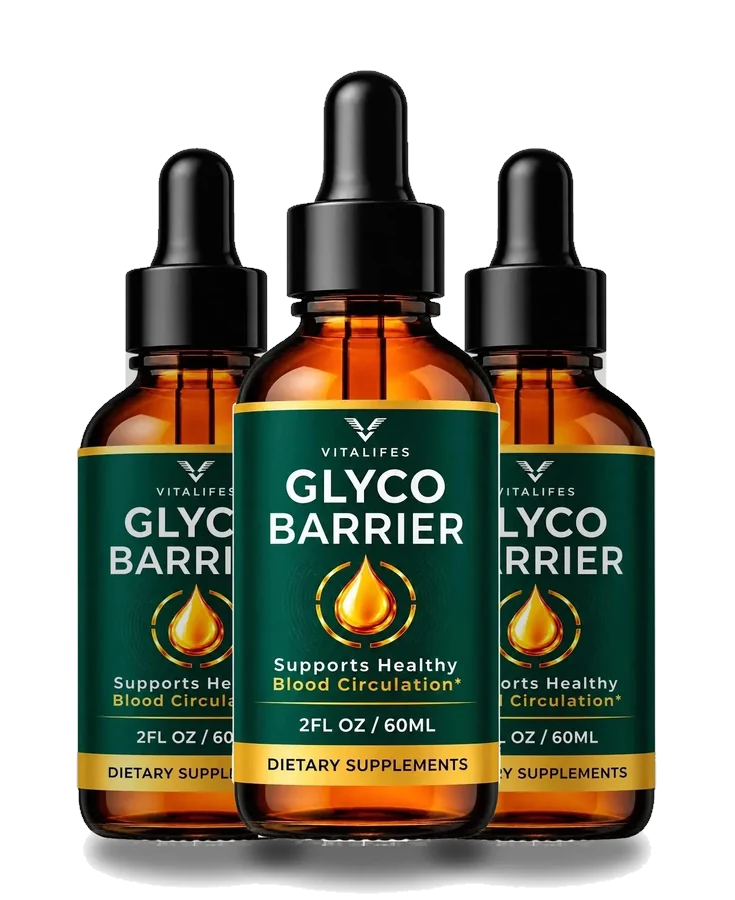
Liquid drops, 2 FL OZ / 60ML a bottle, 30 servings at 1 mL twice daily. Prices and the money-back window are printed on the listing; the order desk number sits in the footer. No per-ingredient amount is published, and you should know that before you pay.
Price and money-back window on the listing · ships from inside the US · order desk number in the footer