Grape seed extract
NCCIH reports that research has not shown it to be helpful for any health condition, that it is generally well tolerated, and that it may slow blood clotting. The last is the line that matters before surgery.
Official product information
No side effects are published for this product. Here is what is known about each botanical, the seven medication checks, and what to do if something happens.
Written and reviewed by the GlycoBarrier Editorial Desk · Last updated September 22, 2026
Quick answer
No side effects are published for GlycoBarrier, and no trial of this formula exists to have recorded any. The label’s caution is to not exceed the dose and to check with a doctor first if you take medication. Four checks matter most: hawthorn can interact with heart medicines including digoxin; grape seed extract may slow blood clotting, which matters alongside a blood thinner or before surgery; motherwort is avoided in pregnancy; and the panel does not say which horse chestnut preparation this is.
Straight answer
No side effects are published for this product. Not a list, not a frequency, not a single reported case. That is a statement about the paperwork, and it is not a clean safety record: there is no published trial of this formula, so there is nothing that could have recorded one.
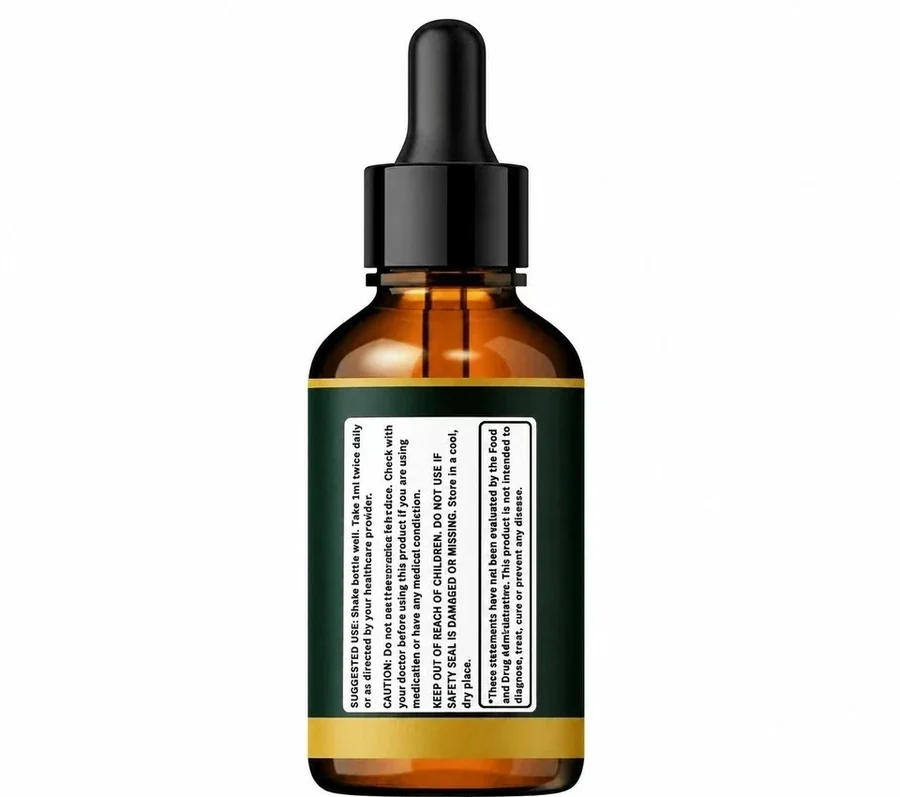
What is published is the label’s caution, printed on the side panel: “CAUTION: Do not exceed the recommended dose. Check with your doctor before using this product if you are using medication or have any medical condition.” Alongside it sit three lines in capitals: keep out of reach of children, do not use if the safety seal is damaged or missing, and store in a cool, dry place.
Beyond that, the honest approach is to look at the six botanicals individually, using the federal pages that exist for three of them. None of those pages tested this bottle, and each describes amounts and preparations that may be nothing like what is inside a 121 mg blend split six ways.
Botanical tinctures, as a class, most often cause mild stomach upset or a reaction to the taste. Anything beyond that is worth reporting.
Interactions
| If this is true of you… | The ingredient behind it | What to do |
|---|---|---|
| A blood thinner, or daily aspirin | Grape seed extract | NCCIH notes it may slow blood clotting. The first combination to raise with a pharmacist. |
| Digoxin, or another heart medicine | Chinese hawthorn | NCCIH states hawthorn can interact with heart medicines including digoxin. Do not start it alongside one without asking. |
| Blood-pressure medicine | Hawthorn, and butcher’s broom | Hawthorn has been studied for blood pressure as well as heart failure, and butcher’s broom has limited interaction data. Ask before adding either to a stable prescription. |
| Surgery booked, at any notice | Grape seed extract | Anything that may affect clotting belongs on the list you give the surgical team. Read the six names out to them. |
| Pregnancy, or breastfeeding | Motherwort | Traditionally used to stimulate the uterus, which is a reason to avoid it in pregnancy rather than a benefit. No safety data exists here either way. |
| A preparation you cannot identify | Horse chestnut | The panel prints two words and no plant part. See the section below. |
| Any regular medicine at all | The formula as a whole | The bottle’s own instruction: check with your doctor before using this product if you are using medication or have any medical condition. |
Three of the six botanicals have a federal health page and three do not. Gotu kola and butcher’s broom are absent from NCCIH’s Herbs at a Glance index of about sixty herbs, and motherwort has no federal page cited here either. An absence is not a warning, but it means there is no plain-language interaction summary for half this blend.
The one that matters
This is the one to understand properly, and it is not an allegation about the liquid. It is about a line missing from the panel.
NCCIH’s page on horse chestnut says that raw horse chestnut seeds, bark, flowers and leaves are unsafe to swallow because they contain a toxic component, and that properly processed standardised extract has that component removed and is considered safe for short-term use. The same page describes a 2012 review of horse chestnut seed extract in chronic venous insufficiency, in which the extract improved symptoms such as leg pain, swelling and itching, with one study finding it comparable to compression stockings.
So the evidence and the warning both attach to one preparation: a standardised extract of the seed. This label prints “Horse Chestnut Extract” and stops. No plant part, no standardisation. For the other five that omission is ordinary; for this one it is the difference between the thing that was studied and the thing that was not.
The panel prints the plant part for three of the six — gotu kola (leaf), hawthorn (fruit), butcher’s broom (root) — so the omission is not a house style. We would ask the order desk on +1 (302) 200-3480 before a first bottle.
Ingredient by ingredient
NCCIH reports that research has not shown it to be helpful for any health condition, that it is generally well tolerated, and that it may slow blood clotting. The last is the line that matters before surgery.
NCCIH reports it has been studied for heart failure and blood pressure, that some studies suggest a benefit as an add-on, and that the evidence is not strong enough to settle it. It can interact with heart medicines including digoxin.
A mint-family herb, Leonurus cardiaca, whose species name records its traditional cardiac use. Traditionally used to stimulate the uterus, so it is avoided in pregnancy. No federal consumer page is cited here for it.
Neither appears in NCCIH’s Herbs at a Glance index of about sixty herbs, which is why this page cannot give you an interaction summary for either. Tell a clinician you are taking them.
RO water, vegetable glycerin, natural flavor, sodium benzoate, potassium sorbate, malic acid and sucralose — all printed on the panel.
The blend is 121 mg a serving, split six ways in unknown proportions. A small amount is a weaker reason to expect an effect and a weaker reason to expect a problem. Neither is a guarantee.
Act
Before anything else, and without waiting to see whether it settles.
Trouble breathing, swelling of the face or throat, a spreading rash, chest pain or fainting are emergencies, not supplement questions.
Read the six botanicals out, say the blend is 121 mg per 2 mL serving twice daily, and mention that no individual amount is published.
Call +1 (302) 200-3480 with the lot number from the bottle and your order ID. A seller cannot act on a pattern nobody reports.
The lot marking, the seal and the remaining liquid are the only physical evidence there is.
Date, dose, what you noticed and anything else you took that day. Two lines the same evening beat a reconstruction later.
The printed limits
The dose is part of the safety picture, which is why the bottle prints its caution in capitals. Two millilitres a day, taken as 1 mL twice, is the whole instruction. Taking more is not a small transgression on a formula containing hawthorn and grape seed, and it breaks the only honest test you can run: a month at a dose you invented tells you nothing.
Do not use if the safety seal is damaged or missing. We would treat that as absolute. Call the order desk for a replacement rather than taking the chance.
Keep out of reach of children. An amber dropper bottle of sweetened liquid is exactly the sort of thing a child will try, and sucralose is on the panel.
Store in a cool, dry place. Amber glass blocks light because botanical extracts degrade in it, and the panel’s EXP 12/2028 assumes the bottle was kept properly.
Hard lines
Anyone under 18, because the label is for adults 18 and over and no data exists here for anyone younger. Anyone pregnant or breastfeeding, because of the motherwort. Anyone on a blood thinner, a heart medicine or blood-pressure medicine who has not asked a clinician. And anyone with leg swelling or vein changes that have not been looked at.
No dietary supplement is FDA approved; the FDA is not authorised to approve them for safety and effectiveness before sale. A roundel reading “FDA-registered facility” describes a registration, and a GMP mark describes record-keeping. Neither is a test result, and there is no laboratory report behind lot GLY-26/GO-2426 or certificate GLY-2426-26-GO either. Every seal, explained →
In short
Put plainly: for most healthy adults, six common botanical extracts sharing 121 mg is a small thing to take. That is not the same as calling the product safe for you specifically.
Three things deserve care, and they are the same three every time. Hawthorn, because of heart medicines. Grape seed extract, because of clotting and surgery. Horse chestnut, because the preparation decides everything and the label does not name it. Motherwort makes it four if pregnancy is in the picture.
The FDA’s consumer page and the NIH Office of Dietary Supplements make the same point in different words: supplements can interact with medicines, and the person who needs to know what you are taking is the clinician already treating you. Telling them is free, and it is the most useful thing on this page.
Questions
For most healthy adults the named botanicals are common in supplements and 121 mg is a small amount. Three things deserve care: hawthorn, which can interact with heart medicines; grape seed extract, which may slow blood clotting; and horse chestnut, where the preparation matters a great deal and the label does not specify it.
It can. Hawthorn can interact with heart medicines including digoxin. Grape seed extract may slow blood clotting, which matters alongside warfarin, aspirin or surgery. The label itself says to check with your doctor before using it if you take medication.
It is the ingredient to understand properly. NCCIH states that raw horse chestnut seeds, bark, flowers and leaves are unsafe to swallow because they contain a toxic component, and that properly processed standardised extract has that component removed and is considered safe for short-term use. This label prints “Horse Chestnut Extract” and nothing else - no plant part, no standardisation. We would ask the order desk before a first bottle.
None are published for this product. Botanical tinctures most often cause mild stomach upset or a reaction to the taste. Anything beyond that is worth reporting to the order desk on +1 (302) 200-3480 and to your own clinician.
No. The bottle prints its own answer: “CAUTION: Do not exceed the recommended dose.” That is the clearest instruction on the label and there is no reason to argue with it.
No dietary supplement is. The FDA is not authorised to approve supplements for safety and effectiveness before they are sold. A seal reading “FDA-registered facility” describes a factory’s registration, not this product.
References
If you take medicine regularly, read the six botanical names to a pharmacist first. Order desk +1 (302) 200-3480.
Price and money-back window on the listing · ships from inside the US · order desk +1 (302) 200-3480