GlycoBarrier blog
Hawthorn, Horse Chestnut and Grape Seed: What the Evidence Says
Three of these six have proper federal summaries. One of them contains the strongest finding on this whole label, and a warning with it.
Start here
Three of the six have a federal page
Six botanicals are named on this label. Three of them have a plain-language page on a federal health site that we opened and read: hawthorn, horse chestnut and grape seed. Three do not.
The three pages do not say the same thing as each other. One is encouraging and unsettled, one holds the strongest finding on this whole label together with the sharpest warning, and one reports that the research has not shown a benefit for anything.
One thing to hold all the way through: none of this research was conducted on this product. Citing a page about a plant is not evidence about a bottle, and the last two sections of this post are about the distance between those two things.
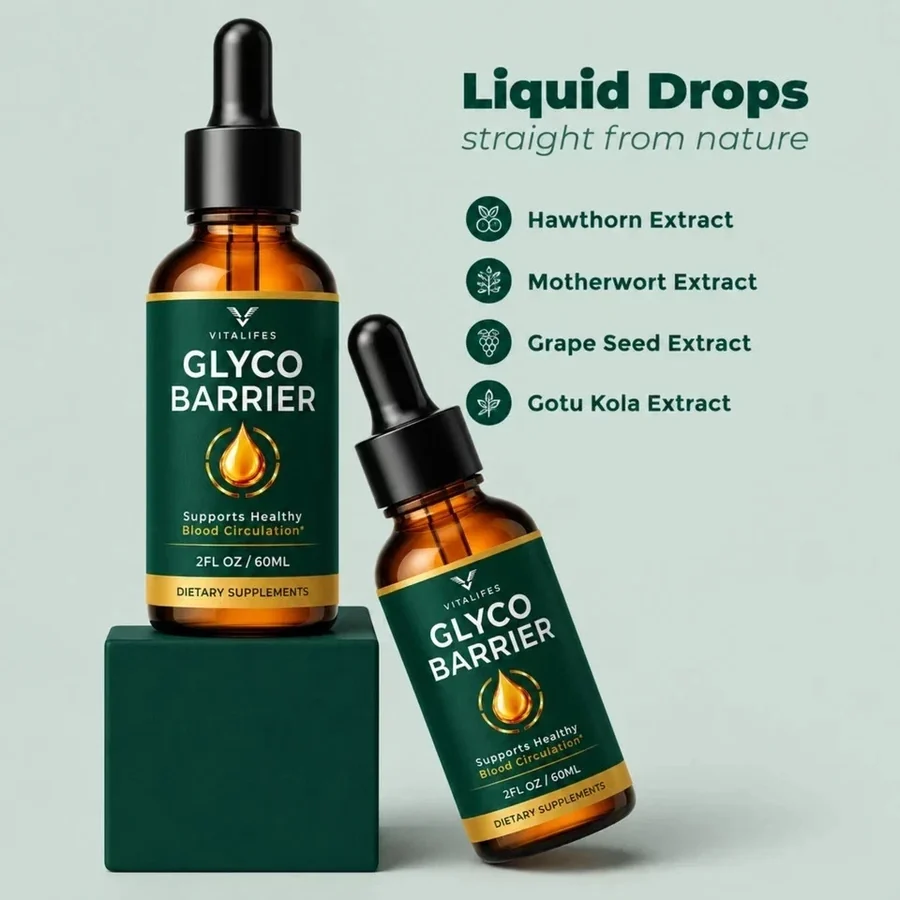
Botanical one
Hawthorn: studied, unsettled
The label prints “Chinese Hawthorn Extract (fruit)”, second in the blend and therefore the second-largest share of it.
NCCIH’s summary reports that hawthorn has been studied for heart failure and blood pressure. Some studies suggest a benefit when it is used as an add-on in heart failure, and the evidence is not strong enough to settle the question. That is a carefully built sentence and it deserves to be read exactly as written: it says some studies, it says add-on, it names heart failure specifically, and it declines to conclude.
Notice what that is not. It is not a finding about circulation in healthy adults. Research on an add-on treatment in a diagnosed condition is among the least transferable evidence there is to a general wellbeing product.
The interaction worth knowing
The same page reports that hawthorn can interact with heart medicines, including digoxin. Anyone taking a heart medicine should raise this bottle with their prescriber before starting it, and the bottle’s own caution line says the same thing in broader terms: check with your doctor if you are using medication or have a medical condition.
Botanical two
Horse chestnut: the strongest finding here
Horse chestnut sits third of six on the panel, and it is the ingredient here with the clearest controlled-trial record.
NCCIH’s summary describes a 2012 review of horse chestnut seed extract for chronic venous insufficiency. It reports that the extract improved symptoms such as leg pain, swelling and itching, and that one study found it comparable to compression stockings.
That is the strongest sentence available about anything on this label, and it is worth being precise about its edges.
Four things that sentence is tied to
A condition. Chronic venous insufficiency is a diagnosed vein condition, not a description of how anyone’s legs feel at the end of a long day.
A plant part. Seed extract. This label prints no plant part against horse chestnut at all.
A preparation. A standardised extract, not a botanical extract of unstated strength sharing a dropper with five others.
A comparison, once. One study inside that review, against compression stockings. It is a real and striking result, and it is one study, and it is reported here because it is what the federal page says rather than because it flatters this bottle.
Read this part carefully
The horse chestnut warning, in full
The same page carries a warning, and it is not a small one. It belongs next to the finding rather than three paragraphs away from it.
Raw horse chestnut is unsafe to swallow
NCCIH states that raw horse chestnut seeds, bark, flowers and leaves are unsafe to swallow, because of a toxic component they contain. It also states that properly processed standardised horse chestnut seed extract has that component removed, and is considered safe for short-term use.
Both halves have to travel together. Printing the first half alone would make a reasonable ingredient sound dangerous; printing the second alone would quietly drop the reason processing matters in the first place. The distinction between the raw plant and the properly processed extract is the entire safety story for this botanical.
Which is why the missing plant part on this label is more than a typographical nuisance. The line reads “Horse Chestnut Extract” with nothing in brackets after it. The evidence and the safety reassurance both attach specifically to standardised seed extract, and the panel does not say seed, does not say standardised, and gives no percentage or marker compound.
We are not suggesting the liquid contains anything unsafe; nothing in our sources says that. We are saying the label does not print the words that would let a reader match the bottle to the reassurance.
Botanical three
Grape seed: studied, and not shown to help
Grape seed extract is printed last of the six, which makes it the smallest share of the blend.
NCCIH reports that grape seed extract has been studied for a number of conditions including cardiovascular disease, and that research has not shown it to be helpful for any health condition. It also reports that grape seed extract is generally well tolerated, and that it may slow blood clotting.
The clotting note is the practical one. Anyone on a blood thinner, or with surgery or a dental procedure coming up, should mention this bottle to whoever is treating them. And it is a fair observation that the ingredient with the plainest negative finding is the one the ordering rule places smallest. That is the sensible way round.
Botanicals four to six
The three with no federal summary
The other three are gotu kola, butcher’s broom and motherwort, and the honest statement about them is about the documentation rather than about the plants.
Gotu kola and butcher’s broom
NCCIH publishes an index called Herbs at a Glance, which runs to roughly sixty herbs. Neither gotu kola nor butcher’s broom is in it. That is a checkable fact rather than an opinion: open the index and look.
It matters here more than it would elsewhere, because gotu kola is printed first on this panel, which the ordering rule makes the largest share of the blend. The biggest ingredient in the bottle is one of the two with no federal plain-language summary.
Motherwort
Motherwort is in the mint family, Leonurus cardiaca, and the species name itself records a long traditional association with the heart. It has also been used traditionally to stimulate the uterus, which is the reason it is avoided in pregnancy. No federal page on motherwort is cited anywhere on this site, because none was opened and read for it.
What absence does and does not mean
A plant missing from an index of sixty herbs has not been found unsafe. It has not been found ineffective either. It means no federal plain-language summary exists for a reader to check, so there is nothing to weigh in either direction. Absence of a page is absence of a summary. Anyone who reads it as evidence of harm, or as evidence of a hidden benefit, is reading something that is not there.
The distance
Why none of this transfers to this bottle
Three federal pages, one genuinely strong finding, one clear negative and one unsettled. Now the part that a seller would normally leave out.
The preparations are different. The research above was conducted on single, usually standardised extracts. This bottle is a botanical extract blend in a glycerin and water base, and no standardisation is printed for any member of it.
The plant parts are unstated. Three of the six lines carry a part — leaf, fruit, root. Three carry none, and one of those three is the ingredient whose whole evidence base and whole safety reassurance are specific to the seed.
The scale is different. The declared blend is 121 mg per 2 mL serving, split six ways in proportions nobody publishes. Trial work on these plants is on one extract at a stated amount, taken for a stated period.
And nothing was tested as a blend. No trial of this formula has been published, and none is claimed. Six ingredients in one bottle are not six bodies of evidence added together.
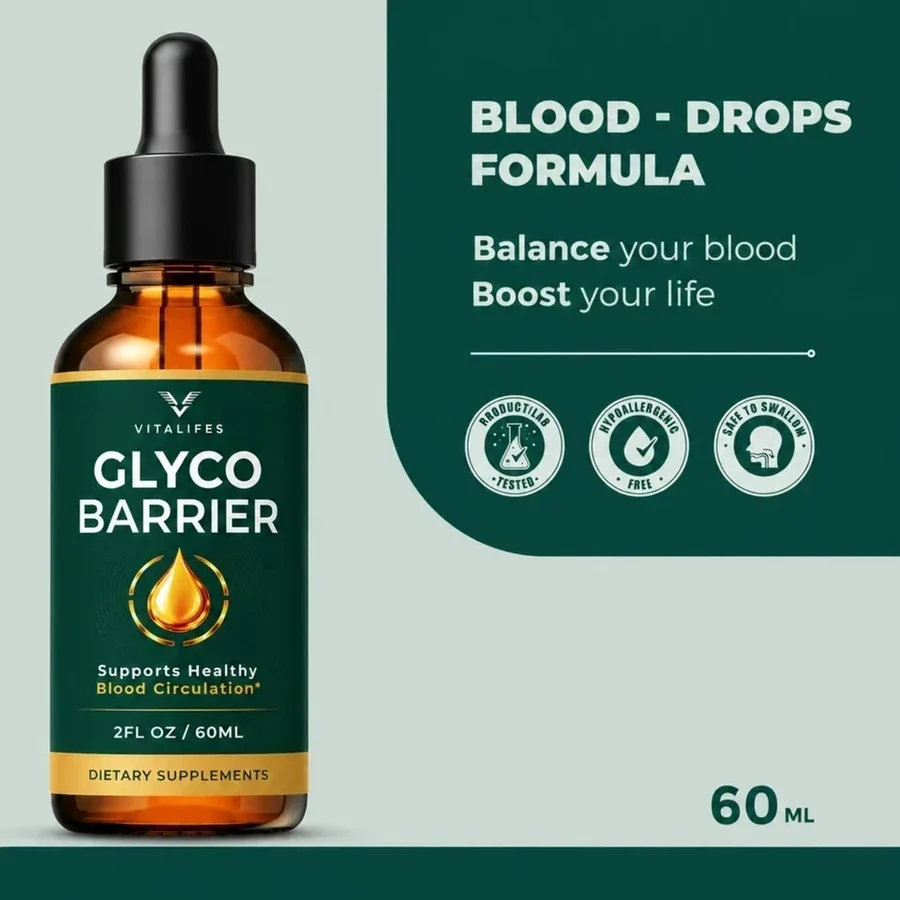
Summary
What that leaves you with
Half the label has a federal page behind the plant, and half does not. The strongest finding belongs to the ingredient whose plant part is not printed. The plainest negative belongs to the smallest share. The largest share belongs to a plant with no federal summary at all.
That is not a verdict on whether GlycoBarrier is worth taking, and this post is not trying to smuggle one in. It is the map of what is known about the plants and what is printed on the bottle, and the two do not line up as neatly as any marketing panel implies. If you are taking a heart medicine, a blood thinner, or you are pregnant, the useful outcome of this post is a short conversation with your prescriber before the first dose rather than after it.
References
Sources
- National Center for Complementary and Integrative Health. Hawthorn: Usefulness and Safety. www.nccih.nih.gov. Accessed September 22, 2026.
- National Center for Complementary and Integrative Health. Horse Chestnut: Usefulness and Safety. www.nccih.nih.gov. Accessed September 22, 2026.
- National Center for Complementary and Integrative Health. Grape Seed Extract: Usefulness and Safety. www.nccih.nih.gov. Accessed September 22, 2026.
- National Center for Complementary and Integrative Health. Herbs at a Glance. www.nccih.nih.gov. Accessed September 22, 2026.
- NIH Office of Dietary Supplements. Botanical Dietary Supplements: Background Information. ods.od.nih.gov. Accessed September 22, 2026.
Order GlycoBarrier from the official page
Liquid drops, 2 FL OZ / 60ML a bottle, 30 servings at 1 mL twice daily. Prices and the money-back window are printed on the listing; the order desk number sits in the footer. No per-ingredient amount is published, and you should know that before you pay.
Price and money-back window on the listing · ships from inside the US · order desk number in the footer