Official product information
How Does GlycoBarrier Work?
Six botanicals from three traditions, three federal health pages, one real trial finding — and no study of this formula at all.
Written and reviewed by the GlycoBarrier Editorial Desk · Last updated September 22, 2026
Quick answer
Honestly: nobody can tell you how GlycoBarrier works, because no trial of this formula has been published and the 121 mg blend is never broken down by ingredient. What can be described is the map — six botanicals from three traditions: venous tone (horse chestnut and butcher’s broom), cardiac herbs (hawthorn and motherwort), and an antioxidant beside a traditional circulation herb (grape seed and gotu kola). A map of what a formula is built from is not a claim about what it does.
Read this first
What a mechanism story is, and what it is not
Most pages with this title do the same thing. They describe a pathway in the body, attach an ingredient to each step, and let the reader assume the product has been shown to travel it — accurate about the plants, silent about the gap between the plants and the bottle.
So it is worth saying plainly what this page is instead. No trial of GlycoBarrier exists. Every source cited below examined a single ingredient, usually as a standardised single extract at an amount larger than this entire blend, and none tested this bottle.
On top of that sits the second gap: the panel declares 121 mg for six extracts together and never divides it, so even where a plant has real published work behind it, that work cannot be lined up against the amount here.
Two unknowns stacked on each other is not a reason to write nothing. It is a reason to be exact about what follows: a map of the formula — which plants are in it, which tradition each comes from, and where each thread runs out.
Group one of three
The venous-tone tradition: horse chestnut and butcher’s broom
Horse chestnut and butcher’s broom are the pair European preparations have used for leg-vein complaints for decades, and the two the seller’s marketing panel leaves out. Third and fifth on the label, either side of motherwort.
Horse chestnut: the strongest thread here
NCCIH describes a 2012 review of horse chestnut seed extract in chronic venous insufficiency. The extract improved symptoms including leg pain, swelling and itching, and one study found it comparable to compression stockings. That is the most substantial thing anyone can honestly say about any plant on this bottle.
Three conditions come attached. The finding belongs to a standardised seed extract, and this panel prints neither part nor standardisation. The same NCCIH page warns that raw seeds, bark, flowers and leaves are unsafe to swallow because of a toxic component that proper processing removes. And chronic venous insufficiency is a diagnosis, not an aching evening — MedlinePlus covers varicose veins as a medical topic with medical options.
Butcher’s broom: the traditional partner
A low Mediterranean evergreen; the label specifies the root, the part European preparations use, and it is normally found beside horse chestnut, exactly as here. The honest limit: it is not among the roughly sixty herbs in NCCIH’s Herbs at a Glance index, so there is no plain-language federal summary to send you to.
Group two of three
The cardiac-herb tradition: hawthorn and motherwort
Chinese hawthorn and motherwort are second and fourth on the panel, and they come from a different tradition — not veins in the legs but the heart, in the older herbal sense.
Chinese hawthorn: studied, and unsettled
A thorny shrub in the rose family. This label names the Chinese species and specifies the fruit, the part eaten as a food in China and used in the traditional preparations.
NCCIH reports that hawthorn has been studied for heart failure and blood pressure, that some studies suggest benefit as an add-on in heart failure, and that the evidence is not strong enough to settle the question. Neither a dismissal nor an endorsement.
The same page carries the interaction that matters most here: hawthorn can interact with heart medicines, including digoxin. The scale problem is sharpest here too — published trials commonly use hundreds of milligrams of a standardised extract, against 121 mg shared six ways.
Motherwort: a name that records a tradition
A mint-family plant, Leonurus cardiaca. The species name is the historical record of what it was used for, which is why it keeps turning up beside hawthorn. Controlled human research is sparse and we cite no federal page, because none of the sources we opened covers it. The safety line is not optional: motherwort has traditionally been used to stimulate the uterus, so avoid it in pregnancy.
Group three of three
The antioxidant and the traditional pair: grape seed and gotu kola
The last pair sits at the two ends of the panel. Gotu kola is printed first and grape seed last, which by the ordering rule makes them the largest and smallest shares. They are grouped here because neither belongs to the traditions above.
Grape seed: the clearest federal page
Made from the seeds left after winemaking, rich in proanthocyanidins, and one of the commonest ingredients in circulation formulas. NCCIH is unusually direct: it has been studied for conditions including cardiovascular disease, and research has not shown it to be helpful for any health condition. It is generally well tolerated, and it may slow blood clotting — the note to carry into any conversation about a blood thinner, aspirin or booked surgery. We quote that rather than paraphrase it away. A page citing NCCIH for hawthorn and skipping it for grape seed would be picking sources by convenience.
Gotu kola: the largest share, the thinnest file
Centella asiatica, a small creeping plant from wet ground across Asia; the label prints “(leaf)”. In Ayurvedic and Chinese practice it is the traditional circulation herb of this group. The checkable point: NCCIH’s Herbs at a Glance index covers about sixty herbs and neither gotu kola nor butcher’s broom is among them. An index is not a ruling, but the ingredient carrying the largest share here is the one we can point you at the least evidence for.
The shape of the whole map
Two plants with substantial federal pages, one reporting no demonstrated benefit for any condition. One with a real trial record attached to a preparation this label does not confirm. Three resting on traditional use. All six sharing 121 mg in unpublished proportions.
ingredients come from
federal health page
split not published
of this formula
Form and delivery
The part that is not speculation: how the liquid is delivered
Leave the plants aside. The other half of a mechanism story is delivery, and here there is something concrete, because the label says what the liquid is made of.
The base is RO water and vegetable glycerin. Glycerin is the workhorse: sweet, viscous and good at holding botanical extracts in suspension. Malic acid holds the pH steady, two preservatives keep a water-based liquid from spoiling, and sucralose and natural flavour deal with the taste.
Extracts settle, so the bottle has to be shaken. On a suspension this is not a formality: material that settles between doses makes the early doses of a bottle weak and the late ones strong. Whatever the six plants are doing, an unshaken bottle delivers an uneven month of them.
A liquid is measured rather than counted. A capsule is a fixed amount whether you concentrate or not; 1 mL from a pipette is fixed only if you use the graduation.
None of this makes the formula work. It does mean the two steps under your control are printed on the bottle rather than left to guesswork, and the step-by-step version is on the how to take it page.
The honest section
Where the mechanism map runs out
| Where it stops | Why | What would settle it |
|---|---|---|
| The amount of each plant | One blend total, never divided. Descending order gives the rank and nothing about the gaps. | A full panel with six amounts, or a manufacturer statement giving the split. |
| The preparation of each extract | No ratio or standardisation for any of the six, and no plant part for three. | A ratio and a standardisation on the label, or a confirmed answer from the order desk. |
| Whether the combination behaves like its parts | Every source cited studied one plant alone. Nothing published examines these six together at this amount in this base. | A trial of this formula. None exists, and we would say so if one did. |
| What any of it does for you | A structure/function claim is a permission to describe a role, not a finding. The FDA footnote exists for this reason. | Nothing available to a supplement. This is the edge of the category, not of this brand. |
Two of those four could be fixed on the label tomorrow by printing lines other labels already print. One would take a study. One cannot be fixed at all. The first two are things GlycoBarrier chose not to publish; the last two are things no supplement can tell you, and being clear about which is which is most of what an honest mechanism page offers.
Our reading
So what should you take from all this?
If you have read this far hoping for a sentence beginning “GlycoBarrier works by”, we owe you a straight reply: there is no such sentence available, and any page that gives you one has written it.
What is available is a reasonable account of why these six plants are in a bottle together. Two venous-tone botanicals with a long European record and one genuine trial finding between them; two heart herbs from an older tradition, one of them explicitly unsettled; one antioxidant with a federal page reporting no demonstrated benefit; one traditional circulation herb with the largest share and the thinnest file. A coherent formula, and not a tested one.
So the useful question is not whether the mechanism is plausible, because it is. It is what you are buying at 121 mg a serving — a daily habit built on six traditional circulation botanicals. Bought as a treatment for leg swelling, vein changes or anything cardiovascular, it is the wrong purchase, and a supplement that delays that appointment costs you time you cannot buy back.
Questions
GlycoBarrier FAQ: how it works questions
Is there a study on GlycoBarrier?
No. Every reference on this site is about a single ingredient, usually at a different amount and in a different preparation. None of them tested this bottle.
Does it work for everyone?
No supplement does, and this one has no published trial on it at all. Everything on this site is about what the label contains, not about what it will do for you.
Is GlycoBarrier safe?
For most healthy adults the named botanicals are common in supplements and 121 mg is a small amount. Three things deserve care: hawthorn, which can interact with heart medicines; grape seed extract, which may slow blood clotting; and horse chestnut, where the preparation matters a great deal and the label does not specify it.
Does it interact with medication?
It can. Hawthorn can interact with heart medicines including digoxin. Grape seed extract may slow blood clotting, which matters alongside warfarin, aspirin or surgery. The label itself says to check with your doctor before using it if you take medication.
What form does it come in?
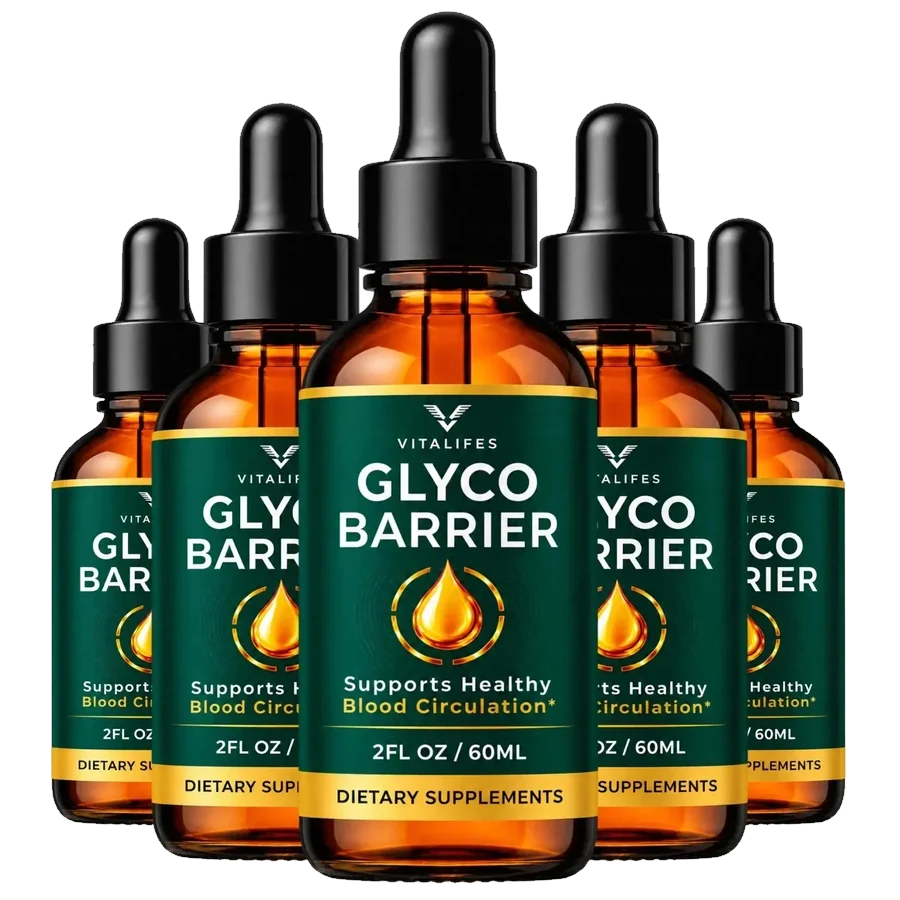
One form only. Liquid drops with a glass pipette dropper, in a 2 fl oz / 60 mL amber bottle. There is no capsule, tablet or gummy version in the material we were given.
References
Sources for this page
- National Center for Complementary and Integrative Health. Hawthorn: Usefulness and Safety. www.nccih.nih.gov. Accessed September 22, 2026.
- National Center for Complementary and Integrative Health. Horse Chestnut: Usefulness and Safety. www.nccih.nih.gov. Accessed September 22, 2026.
- National Center for Complementary and Integrative Health. Grape Seed Extract: Usefulness and Safety. www.nccih.nih.gov. Accessed September 22, 2026.
- National Center for Complementary and Integrative Health. Herbs at a Glance. www.nccih.nih.gov. Accessed September 22, 2026.
- MedlinePlus, U.S. National Library of Medicine. Varicose Veins. medlineplus.gov. Accessed September 22, 2026.
- American Heart Association. What Is Cardiovascular Disease?. www.heart.org. Accessed September 22, 2026.
- NIH Office of Dietary Supplements. Botanical Dietary Supplements: Background Information. ods.od.nih.gov. Accessed September 22, 2026.
Next
Keep reading
The six ingredients in detail
Every name on the panel, and the column that reads not published.
Read it →What it is allowed to claim
One claim on the bottle, eight on the panels, and what none of them mean.
Read it →How long it takes
No timeline is published, so here is a plan built around one bottle.
Read it →Order GlycoBarrier from the official page
Six botanical extracts, 121 mg a serving, 1 mL twice daily. No trial of this formula has been published, and this page says so before the order button rather than after it. Order desk +1 (302) 200-3480.
Price and money-back window on the listing · ships from inside the US · order desk +1 (302) 200-3480