Five steps
How Long Does Glyco Barrier Take To Work? A 5-Step Plan
You want a date. There is none, and any page that gives one has drawn it. What you can do is build a fair test around the bottle itself.
Quick answer
No timeline is published for Glyco Barrier and no trial exists, so nobody can say when, or if, it will work. The seller's listing says most buyers waited 3 to 6 weeks, which is unverified. One bottle lasts 30 days at the label dose, so use the bottle as your test and follow the five steps.
On this page
- Key facts
- What should you write down on day one?
- Which dates should you put in the calendar?
- How should you take it during the first weeks?
- How do you judge the result at the end of the bottle?
- When should you stop, carry on or see a doctor?
- What are the timing, price and guarantee facts?
- Frequently asked questions
- Sources used for this page
- Our view
At a glance
Key facts
- No timeline is published by the seller as a policy, and no trial of this formula exists.
- Seller's own listing summary: most buyers waited 3 to 6 weeks. Unverified.
- The main complaint in that summary is a slow start and wanting more in week one.
- One 60 mL bottle at 1 mL twice daily lasts exactly 30 days.
- No result is promised or typical.
- Money-back window length: not published. Read it on the order page.
Step 1
What should you write down on day one?
Before the first dose, write one sentence about what you want to be different. Make it something you could check. A sentence like ankles feel less marked by evening can be tested. A sentence like better circulation cannot.
Give it a score out of ten the same day. The score does not need to be exact. It needs to exist before the product has a chance to flatter itself. Memory is kind to things we paid for, and a note on paper is not.
Step 2
Which dates should you put in the calendar?
Three dates matter. The first is the day you start. The second is 30 days later, when the bottle runs out at 2 mL a day. The third is the end of the money-back window, which you can only read on the order page, since no length is published in our sources.
Put the second date in your calendar with your day-one sentence attached. The empty bottle and the first fair look land on the same day, so the reorder decision is made while you hold the only evidence that counts: your own notes.
Step 3
How should you take it during the first weeks?
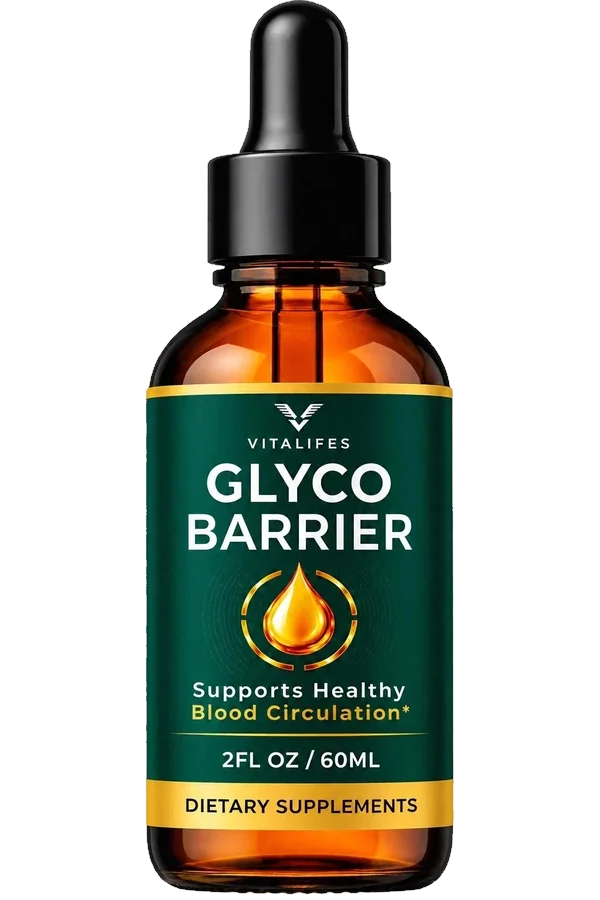
Exactly as printed: shake well, 1 mL twice daily, not more. The seller's own summary says the usual complaint is a slow start and wanting more to happen in week one. That tells you the seller does not expect week one to show much, and neither should you.
Change nothing else in the same weeks if you can. If you begin a new walking plan, new socks and a new supplement together, you cannot tell which did what. Missing doses spoil the test, so link both doses to fixed habits.
Step 4
How do you judge the result at the end of the bottle?
The seller says the most common wait before judging is 3 to 6 weeks. That is a figure about patience, not about effect, and it comes from the seller. One bottle covers about four of those weeks, so a fair first look sits at the bottom of that range.
Re-read your day-one sentence and score it again before you think about reordering. Then read what the result can and cannot mean.
| At the end of the bottle | What it may mean | What it does not mean |
|---|---|---|
| Your score is better | Something changed while you took it | That the drops caused it. Season, sleep and activity can move too |
| Nothing has changed | A fair test at the label dose gave no change | That a second bottle must give the same answer |
| Something feels worse | Stop and speak to your clinician | Anything to ignore |
| You missed many doses | The test was not run at the label dose | A reason to take extra later |
Step 5
When should you stop, carry on or see a doctor?
If nothing changed and you were careful with the dose, that is an answer, and the money is better spent elsewhere. If something improved and you want to carry on, stay at the printed dose and set a new question for the next bottle.
If leg swelling, pain or vein changes are why you started, do not wait on a supplement. Those have medical causes worth ruling out, and a clinician can do far more than drops. The label itself asks you to check with your doctor if you use medicine or have a condition.
A plain safety note
Glyco Barrier is a dietary supplement, not a drug. It is not FDA approved, and no dietary supplement is. It is not a treatment for any disease. If you take medicine or have a medical condition, ask your doctor before you start. This page is general information, not medical advice.
The short table
What are the timing, price and guarantee facts?
| Item | Fact | Note |
|---|---|---|
| Published timeline | None | No trial exists |
| Seller's usual wait | 3 to 6 weeks | Seller's figure, unverified |
| One bottle at label dose | 30 days | 60 mL at 2 mL a day |
| Three bottles | 90 days | Seller says most ordered |
| Price | Not published | Shown at checkout |
| Money-back window | Not published | Read the date rules on the order page |
Questions
Frequently asked questions
How long does Glyco Barrier take to work?
No timeline is published and no trial of this formula exists. The seller's listing says most buyers waited 3 to 6 weeks, which is unverified and describes patience, not effect. Treat one 30-day bottle as your fair first test.
What results should I expect in week one?
Mostly the habit. The seller's own summary lists a slow start and wanting more in week one as the main complaint. Do not judge it in the first days.
Is 30 days long enough to judge it?
It is a fair first look. At the printed dose, one bottle runs out after exactly 30 days. Whether a longer run would change the answer is unknown, because no trial exists.
Should I take more to speed it up?
No. The bottle says not to exceed the recommended dose, and no source shows that more works faster.
Are there Glyco Barrier results I can look at?
We hold no results and print no testimonials. The only timing figure is the seller's 3 to 6 weeks, and we cannot verify it. Keep your own notes instead.
When should I see a doctor instead?
See one if you have leg swelling, leg pain, vein changes or any symptom that worries you, or if you feel worse after starting. Do not use a supplement to put off a medical visit.
References
Sources used for this page
- National Center for Complementary and Integrative Health. Horse Chestnut: Usefulness and Safety. www.nccih.nih.gov
- National Center for Complementary and Integrative Health. Grape Seed Extract: Usefulness and Safety. www.nccih.nih.gov
- MedlinePlus, U.S. National Library of Medicine. Varicose Veins. medlineplus.gov
- NIH Office of Dietary Supplements. Dietary Supplements: What You Need to Know. ods.od.nih.gov
- National Center for Complementary and Integrative Health. Using Dietary Supplements Wisely. www.nccih.nih.gov
None of these pages tested Glyco Barrier itself. What this page says about timing comes from the bottle label, the seller’s pack and the pages listed above.
Our verdict
Our view
Time is the one thing this page cannot give you. What it can give you is a test that does not lie to you: a sentence on day one, a fixed dose, a date at the end of the bottle and a score you cannot rewrite.
That plan costs nothing extra, and it works for any supplement. Follow it, keep the order email and the guarantee screenshot, and let your own notes decide.
Last updated November 4, 2026